Reviewed by Adam Pro, licensed and insured rendering contractors with 15+ years of experience
Acrylic render is a wall coating made by adding an acrylic polymer to the render binder, which makes it more flexible, more crack-resistant and more weather-resistant than traditional cement render. It is applied over brick, concrete, block and AAC (Hebel) in layers of roughly 2 to 10 mm, and it is one of the most popular exterior finishes for homes across Sydney, Newcastle, the Central Coast and the rest of NSW.
This guide explains what acrylic render is, how it compares with cement and polymer render, what it costs in NSW, and how to decide if it suits your home.
Acrylic Render at a Glance
| Question | Quick answer |
|---|---|
| What is it? | A render with an acrylic polymer in the binder |
| Main advantage | Flexibility and crack resistance |
| Typical thickness | About 2 to 10 mm, depending on the product |
| Suitable surfaces | Brick, concrete, block, AAC (Hebel), and some previously coated walls after preparation |
| Indicative cost in NSW | Around $40 to $70 per m², plus preparation (confirm with a written quote) |
| Typical lifespan | Often quoted at 20 to 30 years with correct application and care |
| Best for | Exterior walls, facades, fences and feature walls |
What Is Acrylic Render?
Acrylic render is a protective and decorative wall coating that contains acrylic resin. The resin replaces or supplements the cement and lime used in traditional render, so the finished surface can move slightly with the wall instead of cracking.
It is sold as a bagged powder that is mixed with water on site, or as a ready-mixed product, and it can be finished smooth, sponged or textured.
What Is Acrylic Render Made Of?
Most acrylic renders combine fine sand or aggregate, an acrylic polymer binder, and additives that improve workability, adhesion and water resistance. Many products are available pre-coloured, which reduces the need for repainting.
Where Is Acrylic Render Used?
Acrylic render is most often used on:
- Exterior house walls and facades
- Fences, retaining walls and letterbox walls
- Commercial and multi-residential buildings
- Feature walls in courtyards and alfresco areas
Some products are also rated for internal walls. Always check the manufacturer’s data sheet.
Acrylic Render vs Cement Render
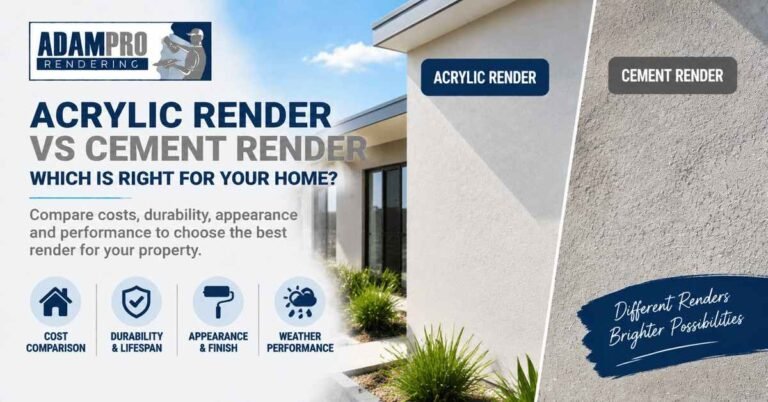
The main difference is the binder. Cement render relies on cement, sand and lime. Acrylic render adds an acrylic polymer, which gives it more flexibility.
| Factor | Acrylic render | Cement render |
|---|---|---|
| Binder | Acrylic polymer | Cement, sand and lime |
| Flexibility | High | Lower, more prone to cracking |
| Colour | Often pre-coloured | Usually needs painting |
| Upfront cost | Often slightly higher per m² | Often lower per m² |
| Painting required | Often not immediately | Yes, after curing |
| Best for | Weather exposure, movement, modern finishes | Traditional look, budget projects |
Want to compare them for your property? See our cement rendering and acrylic rendering service pages.
Acrylic Render vs Polymer Render
The two terms overlap. Polymer-modified render is usually a cement-based render with added polymers to improve adhesion and water resistance. Acrylic render relies more heavily on the acrylic binder. If your project is on brick, block or masonry, our polymer rendering service may also suit.
Acrylic Render vs Texture Coat
Texture coat is a thicker, paint-like coating applied in thin coats, usually 1.5 mm to 3 mm, over an existing sound surface. It is often chosen to refresh walls without a full re-render. See texture coat rendering for details.
Benefits of Acrylic Render
Flexibility and Crack Resistance
The polymer lets the render expand and contract with temperature changes and minor wall movement, which helps reduce hairline cracking.
Weather and Water Resistance
Acrylic render sheds rain well and stands up to UV, wind and coastal conditions when applied correctly. It is water-resistant, but it is not a waterproofing membrane.
Colour and Finish Options
Pre-coloured products give a consistent finish through the render, and textures range from smooth to sponged to coarse.
Lower Maintenance Than Paint
A properly applied render does not peel the way paint can. Compare the two in our guide to rendering vs painting for exterior walls.
Adds Value and Kerb Appeal
A clean, even render can modernise an older brick home and improve the overall presentation of a property.
Disadvantages of Acrylic Render
- Higher upfront cost than basic cement render in many cases
- Skilled application is essential. Poor preparation or mixing is the main cause of failure
- Not every surface suits every product. Some acrylic renders are not suitable over certain sheet substrates unless a specified system is used
- Repairs can be visible if colour or texture does not match
Which Surfaces Can Acrylic Render Be Applied To?
Acrylic render is commonly applied to brickwork, concrete blockwork, concrete walls, and AAC (autoclaved aerated concrete) blocks and panels. Manufacturer data for a widely used acrylic render lists an application thickness of 2 to 10 mm over masonry, concrete and AAC.
Building new walls? Adam Pro also provides Hebel installation and polystyrene cladding, both of which can be finished with a compatible render system.
How Long Does Acrylic Render Last?
Acrylic render is often quoted to last 20 to 30 years. Real-world lifespan depends on the quality of preparation, the thickness and mix, the substrate, sun and weather exposure, and how well gaps and joints are sealed. Regular inspection and timely repairs, including caulking and silicone work around windows and doors, help protect the finish.
How Much Does Acrylic Rendering Cost in NSW?
Acrylic rendering in Australia is commonly priced at around $40 to $70 per square metre, which is a rough guide only. The final price depends on:
- Wall area and height (single storey vs multi-storey, scaffolding)
- Condition of the existing surface and any repairs
- Product and finish (smooth, sponged or textured)
- Preparation, masking and number of coats
- Location and access
For a deeper breakdown, read Adam Pro’s guides to how much house rendering costs in Australia and how much cement rendering costs. Prices are indicative; always compare at least three written quotes.
How Is Acrylic Render Applied?
- Inspect and prepare the wall. Clean off dust, oil, loose paint and contaminants, and repair cracks and damaged areas.
- Mask and protect. Cover windows, doors, roofing, gardens and fixtures.
- Dampen or prime the surface if the manufacturer requires it, especially on porous substrates.
- Mix the render to the correct consistency.
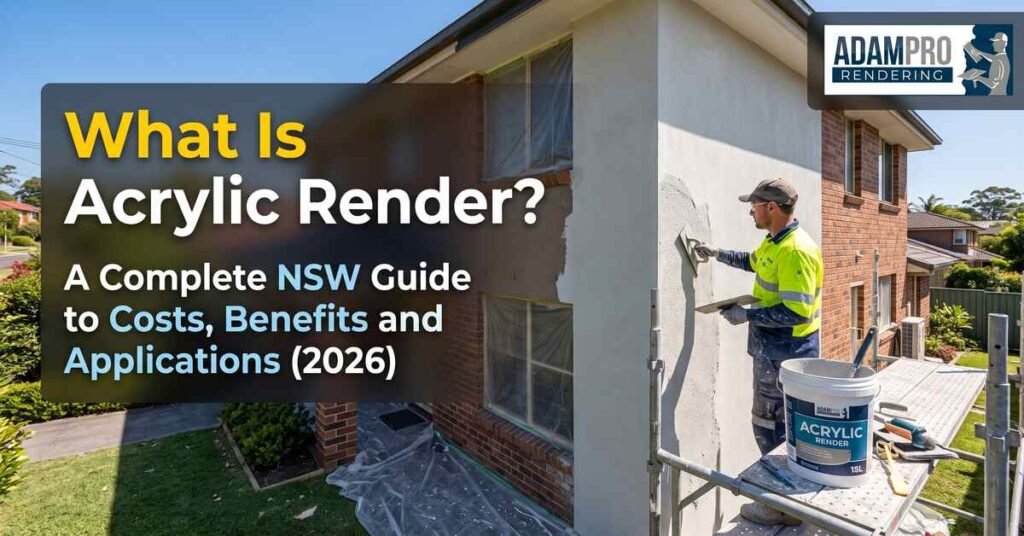
- Apply the base coat with a steel trowel and level it to the required thickness.
- Add reinforcement at joints and corners where needed.
- Finish the surface by floating, sponging or texturing.
- Cure the render following the data sheet. Thicker coats need longer.
- Seal gaps and finish detailing around openings.
Is Acrylic Render Right for Your Home?
Acrylic render is usually a strong choice if:
- Your walls are exposed to sun, rain, wind or salt air
- You want a pre-coloured, low-maintenance finish
- Your existing render is cracking or your paint keeps peeling
- You want a modern, smooth or textured look
Cement render may suit better if you want a traditional finish on a tight budget and plan to paint. If you are unsure, a site inspection is the best way to choose.
Why Choose AdamPro for Acrylic Rendering in NSW?
Adam Pro is a professional rendering company serving homeowners, builders, developers and commercial clients across NSW and Canberra.
- 15+ years of experience in residential and commercial rendering
- Licensed and insured team
- Wide service range: cement, acrylic, polymer and texture coat rendering, flat paint, caulking, Hebel installation and cladding
- Clear, tailored quotes based on your surface, system and budget
Learn more about Adam Pro or browse all rendering services.
Acrylic Rendering Services Across NSW and Canberra
Looking for acrylic rendering in Sydney, acrylic renderers in Newcastle, or acrylic rendering on the Central Coast? Adam Pro covers Sydney, Newcastle and the Hunter Valley, the Central Coast, Wollongong and the Illawarra, the Shoalhaven and South Coast, and Canberra.
Frequently Asked Questions About Acrylic Render
What is acrylic render made of?
Acrylic render combines sand or fine aggregate with an acrylic polymer binder and performance additives. The polymer makes it more flexible, more adhesive and more crack-resistant than traditional sand, cement and lime render.
Is acrylic render better than cement render?
For most exterior walls in NSW, acrylic render is more flexible and less prone to cracking, and it is often available pre-coloured. Cement render is often cheaper upfront but usually needs painting. The best choice depends on the wall, budget and finish you want.
How long does acrylic render last?
Acrylic render is often quoted to last 20 to 30 years. Actual lifespan depends on preparation, workmanship, climate exposure and maintenance.
Is acrylic render waterproof?
Acrylic render is water-resistant and sheds rain, but it is not a waterproofing membrane. Wet areas such as showers still need a compliant waterproofing system installed underneath.
How much does acrylic rendering cost in NSW?
Acrylic rendering is commonly around $40 to $70 per square metre, plus preparation and repairs. Confirm pricing with a written quote based on your property.
Can acrylic render be applied over Hebel?
Yes. Acrylic renders are commonly used on AAC (Hebel) panels and blocks when the manufacturer’s system, primer and jointing requirements are followed.
Final Thoughts
Acrylic render is a flexible, durable and low-maintenance finish that suits most exterior walls in NSW. The result depends on preparation, product choice and skilled application.
Ready for a quote? Call Adam Pro on 0444 522 239 or request a free acrylic rendering quote. You can also read more on our blog.